Static vs Dynamic Risk Factors
Prediction and intervention are not the same thing.
Not all risk factors are created equal. Some factors are static. Others are dynamic. The distinction matters because prediction and intervention are not the same thing.
The strongest predictors may not be treatment targets.
Static Risk Factors
Static factors typically do not change over time, or only change in one direction by increasing risk exposure.
Examples include:
- criminal history
- age at first arrest
- gender
- early life adversity
These factors are often strong predictors of recidivism. But they are not direct intervention targets.
Static and dynamic factors serve different purposes
Static factors are often strong predictors, but dynamic factors are the main targets for intervention.
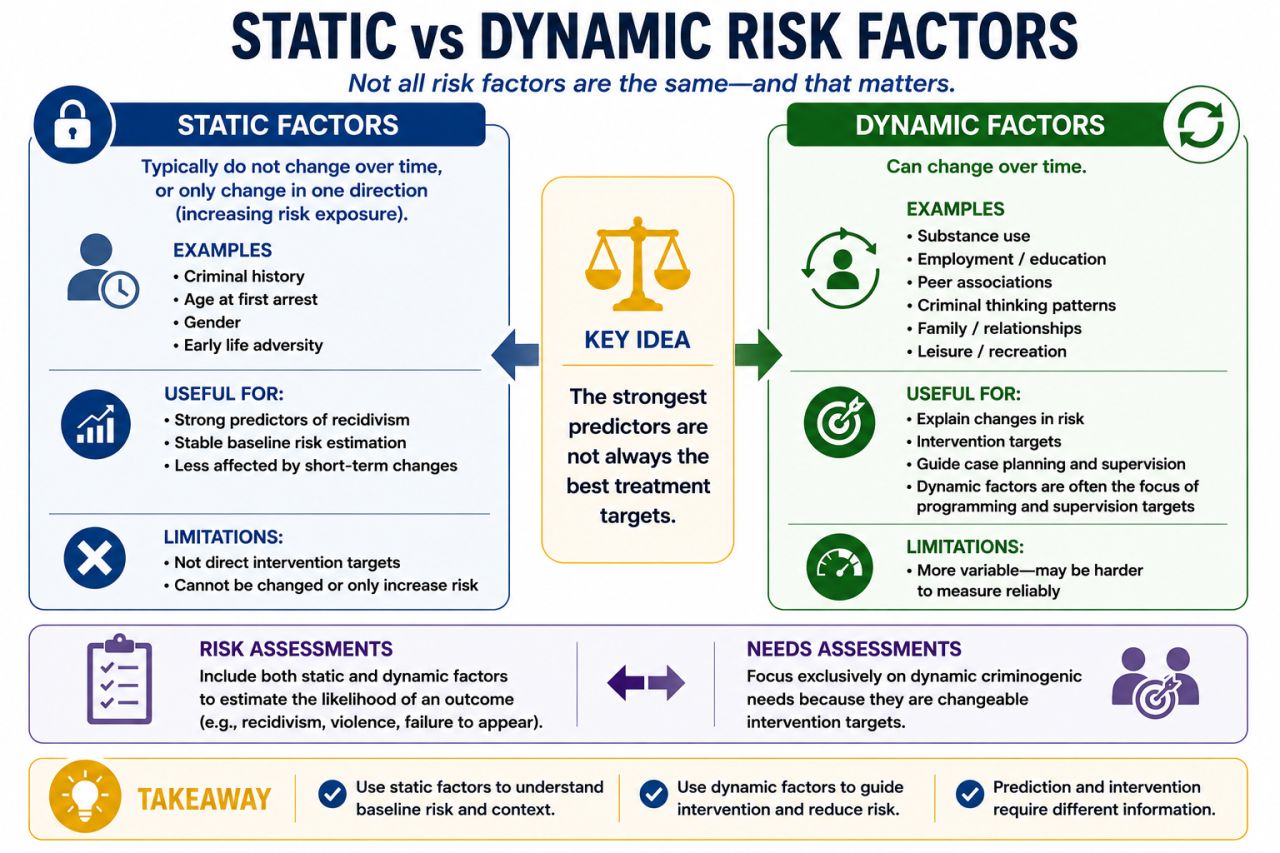
Prediction and intervention are related, but they are not the same task.
Dynamic Risk Factors
Dynamic factors can change over time.
Examples include:
- substance use
- employment and education
- peer associations
- criminal thinking patterns
- family relationships
These factors help explain changes in risk and provide targets for intervention.
Why This Matters
- Strong prediction does not automatically identify treatment needs
- Dynamic factors are the focus of programming and supervision targets
- Effective practice requires understanding both static and dynamic factors
Risk Assessment and Needs Assessment
Most risk assessments include both static and dynamic factors.
Needs assessments focus exclusively on dynamic criminogenic needs because they are changeable intervention targets.
Bottom Line
The strongest predictors may not be treatment targets. Effective correctional practice requires understanding both static and dynamic risk factors.

Zachary Hamilton
Professor
My research centers on innovation in risk and needs assessment development.