Same Score, Different Person
Same score. Different profiles.
Two people can have the same risk score and still be very different. This happens because risk scores combine multiple factors into a single number.
Risk scores summarize information—they do not fully represent it.
Same Score Does Not Mean Same Person
The figure below shows a simple example. Both individuals receive the same total score, but they get there in different ways.
- One person has greater prior history
- The other has more recent needs, such as substance use or employment
Same score, different pathways
Two people can receive the same total score even when the factors behind that score look very different.
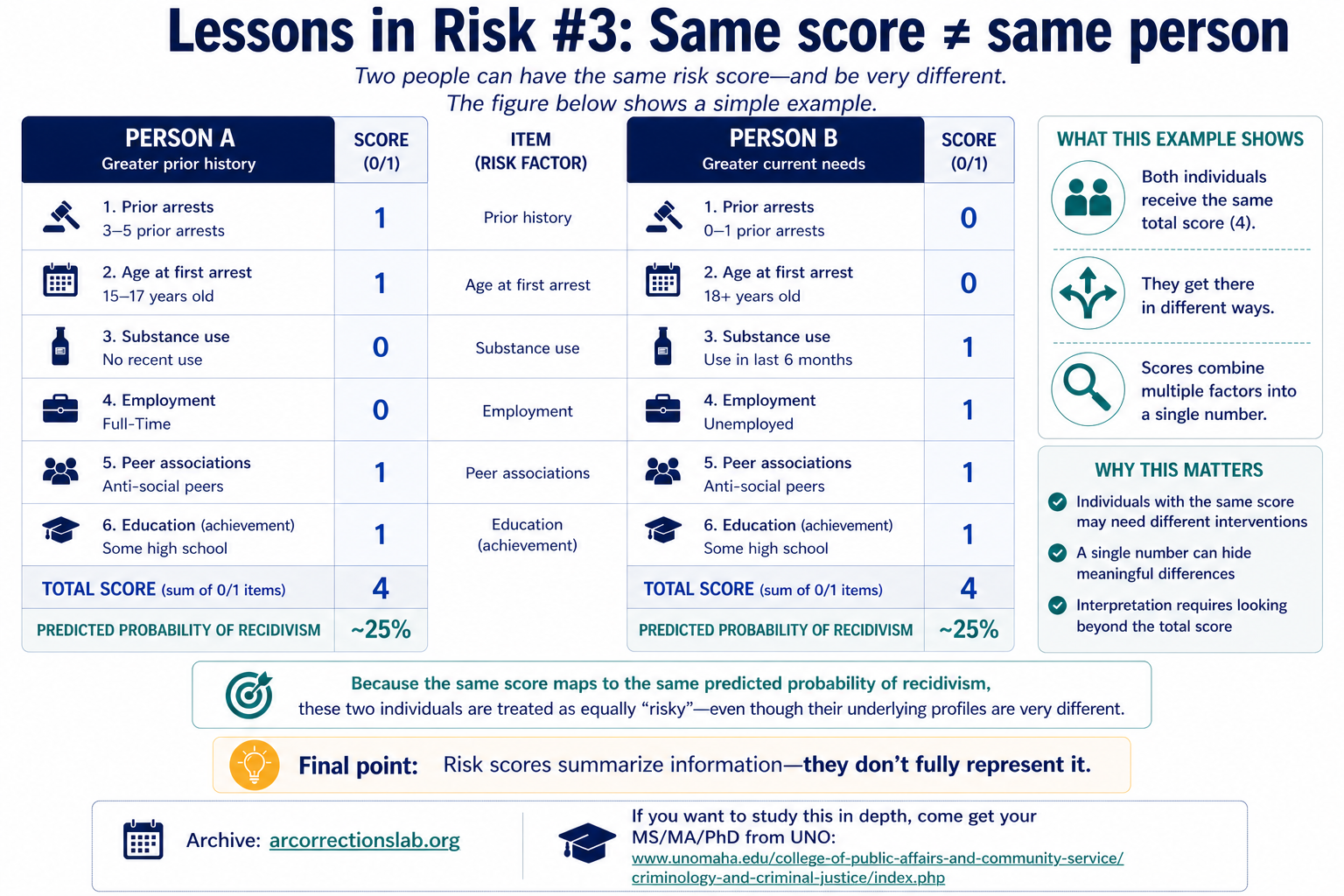
The total score summarizes the profile, but it does not show every difference that produced that score.
Why This Happens
Risk tools combine several factors into one total score. That total score can be useful, but it also compresses information.
Because the same score maps to the same predicted probability of recidivism, two people with the same score may be treated as equally “risky,” even when their underlying profiles are very different.
Why This Matters
- Individuals with the same score may need different interventions
- A single number can hide meaningful differences
- Interpretation requires looking beyond the total score
Bottom Line
Same score does not mean same person. Risk scores summarize information, but they do not fully represent the individual profiles behind the number.

Zachary Hamilton
Professor
My research centers on innovation in risk and needs assessment development.