Criminal Thinking Patterns
Criminal thinking is changeable.
One of the most important criminogenic needs is criminal thinking. But this concept is often misunderstood. Criminal thinking does not refer to intelligence, and it does not mean someone is inherently “criminal.”
Unlike criminal history, criminal thinking patterns tell us something we can potentially change.
What Criminal Thinking Means
Criminal thinking refers to patterns of thinking that support, justify, or facilitate offending.
Examples include:
- minimizing harm
- blaming others
- entitlement
- rationalizing behavior
- impulsive decision-making
Criminal thinking patterns can change
Criminal thinking refers to patterns that support, justify, or facilitate offending. Unlike criminal history, these patterns can become targets for intervention.
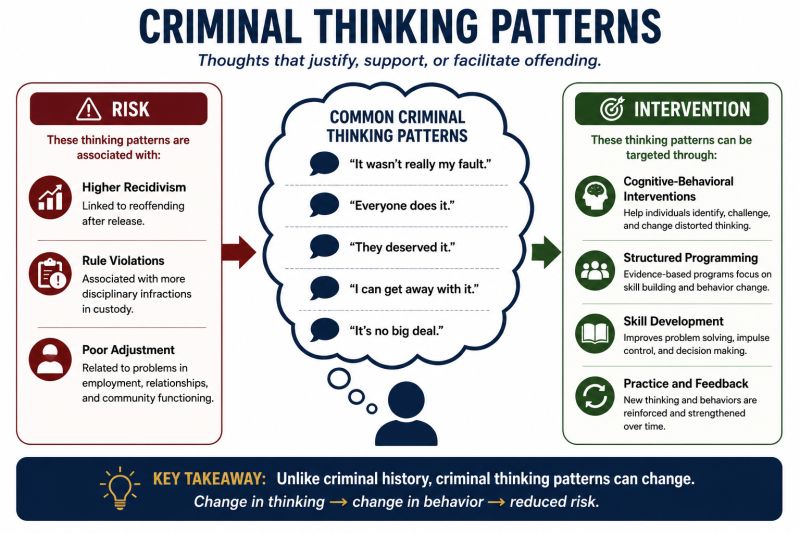
These patterns matter because they are linked to recidivism and can be addressed through intervention.
Why These Patterns Matter
These thinking patterns matter because they are associated with higher rates of recidivism.
Unlike criminal history, however, they can change.
That makes them both:
- predictors of future offending
- intervention targets
Why This Matters for Treatment
This is one reason cognitive-behavioral interventions play such a central role in modern correctional practice.
- Some risk factors can be changed
- Criminal thinking patterns are among the most important intervention targets
- Effective treatment often focuses on changing how people interpret situations, decisions, and consequences
Bottom Line
Unlike criminal history, criminal thinking patterns tell us something we can potentially change. They can help predict future offending and guide intervention.

Zachary Hamilton
Professor
My research centers on innovation in risk and needs assessment development.