Antisocial Peers
Behavior is influenced by the people around us.
One of the strongest criminogenic needs is antisocial peers. In fact, many probation and parole conditions prohibit associating with known justice-involved individuals.
Who we spend time with helps shape what behaviors become normal.
Why Peers Matter
Peers can affect:
- attitudes
- decision-making
- opportunities
- reinforcement of behavior
Peer networks shape behavior
Antisocial peers can normalize, encourage, and reward criminal behavior. Prosocial peers can provide support, accountability, and alternative opportunities.
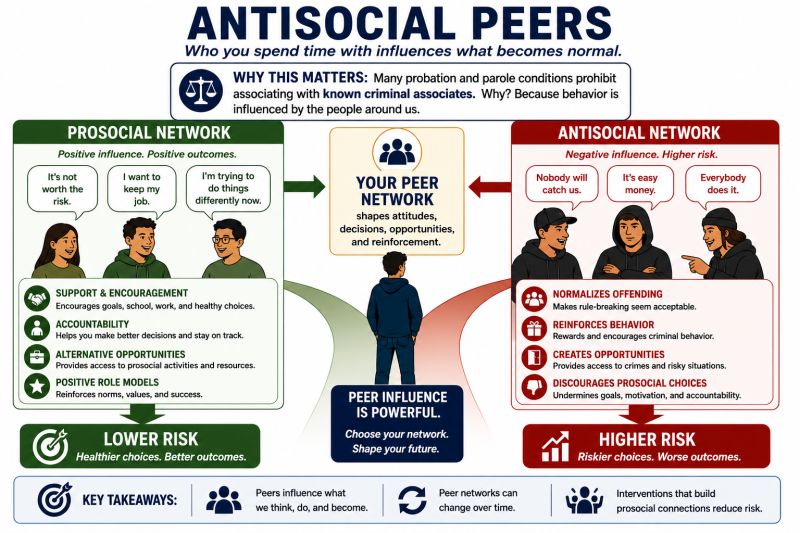
Unlike criminal history, peer associations are dynamic and can become targets for intervention.
How Antisocial Peers Shape Behavior
When people spend time with antisocial peers, criminal behavior can become:
- normalized
- encouraged
- rewarded
How Prosocial Peers Help
At the same time, prosocial peers can provide:
- support
- accountability
- alternative opportunities
- positive role models
This is one reason peer associations are included in many needs assessments.
Why This Is Dynamic
Unlike criminal history, peer networks are dynamic. Changing who someone spends time with can alter the opportunities, reinforcement, and social norms that shape behavior.
Why This Matters
- Social environments influence behavior
- Peer associations can change over time
- Effective interventions often focus on building prosocial networks
Bottom Line
Who we spend time with helps shape what behaviors become normal. Peer associations matter because they can reinforce risk or support change.

Zachary Hamilton
Professor
My research centers on innovation in risk and needs assessment development.