Substance Use
Some needs are more actionable than others.
Not all criminogenic needs are equally responsive to intervention. Substance use is one of the few domains where we have strong evidence that treatment can reduce need levels—and sometimes reduce risk as well.
Substance use matters because it predicts risk and is one of the few domains where meaningful change is possible.
Why Substance Use Appears in Needs Assessments
The figure below shows three reasons substance use appears in nearly every major needs assessment.
Substance use is an actionable need
Substance use appears in major needs assessments because it can create instability, influence behavior, and respond to treatment.
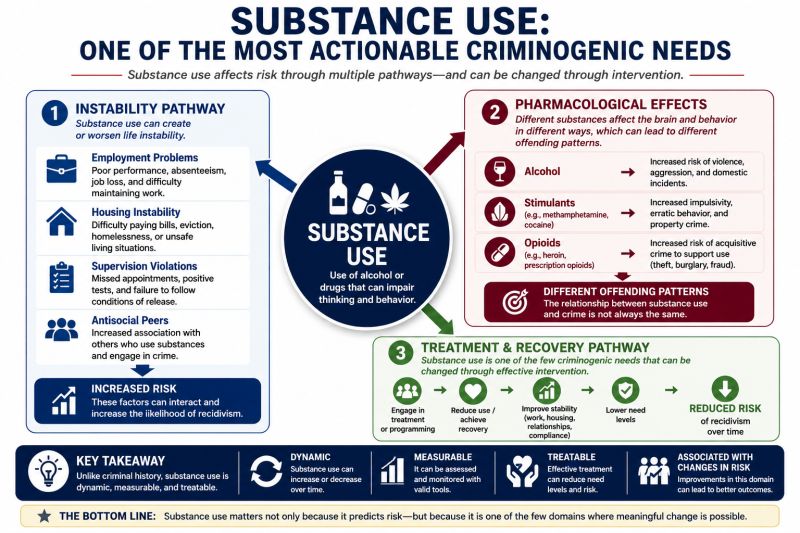
Unlike criminal history, substance use can change, making it an important intervention target.
Substance Use Can Create Instability
First, substance use often creates instability.
It can contribute to:
- employment problems
- housing instability
- supervision violations
- association with antisocial peers
Different Substances Can Influence Behavior Differently
Second, different substances can influence behavior in different ways.
For example:
- alcohol is often associated with violence and aggression
- stimulants can increase impulsive and erratic behavior
- opioids are frequently associated with acquisitive crime and economic motivation
The relationship between substance use and crime is not always the same.
Substance Use Is Treatable
Third, substance use is one of the most treatable criminogenic needs.
Unlike criminal history, substance use can change. Successful treatment and recovery can reduce need levels, improve stability, and contribute to reductions in risk.
Why This Matters
- Substance use affects far more than drug offending
- Different substances can influence different offending patterns
- Effective treatment can change one of the most important criminogenic needs
Bottom Line
Substance use is important not only because it predicts risk, but because it is one of the few domains where meaningful change is possible.

Zachary Hamilton
Professor
My research centers on innovation in risk and needs assessment development.