School, Work, and Stability
School and work create stability.
Many people talk about education and employment as if they are the same thing. Risk and needs assessments often treat them differently.
School and work matter because they create stability, strengthen bonds to conventional institutions, and increase what people have to lose if they return to crime.
School and Work Across the Life Course
The figure below shows why education and employment are treated differently in many risk and needs assessments.
For youth, school is often the primary conventional institution. Assessment items frequently focus on:
- school attendance
- academic performance
- disciplinary problems
- attachment to school
- educational goals
School and work create stability
School and employment are measured differently across the life course, but both can provide structure, accountability, future orientation, and ties to prosocial institutions.
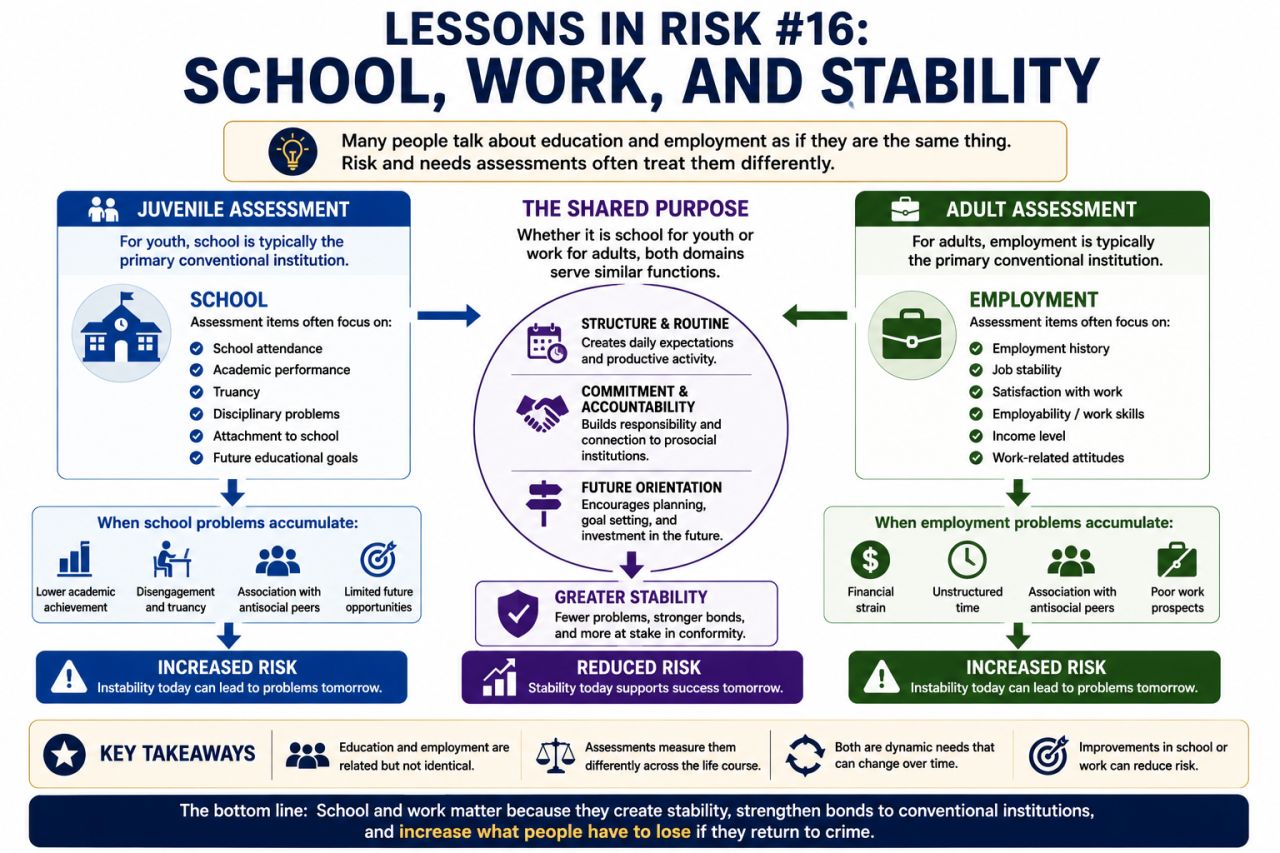
When problems in school or employment accumulate, instability often increases—and as instability increases, so does risk.
Employment Becomes the Primary Institution
For adults, employment often becomes the primary conventional institution. Assessment items frequently focus on:
- employment history
- job stability
- employability
- income
- work-related attitudes
Why These Domains Matter
Even though these domains are measured differently, they often serve similar functions.
Both can provide:
- structure and routine
- accountability
- future orientation
- connections to prosocial institutions
When problems in school or employment accumulate, instability often increases. As instability increases, so does risk.
Why This Matters
This is one reason difficulties in school and employment are considered criminogenic needs. Unlike criminal history, they can change. And because they can change, they become potential targets for intervention.
- Education and employment are related but not identical
- Assessments measure them differently across the life course
- Improvements in school or work can contribute to reductions in need levels and risk
Bottom Line
School and work matter because they create stability, strengthen bonds to conventional institutions, and increase what people have to lose if they return to crime.

Zachary Hamilton
Professor
My research centers on innovation in risk and needs assessment development.