Stabilizers and Destabilizers
Stability may matter more than any single domain.
Historically, many risk and needs assessments included leisure and recreation as a separate criminogenic need. But more recent research suggests that leisure itself may not be the most important part of the story.
Stability often supports long-term success, while instability can undermine progress across many areas of life.
From Leisure to Stability
Historically, many risk and needs assessments included leisure and recreation as a separate criminogenic need.
The idea was straightforward: people who lack structured, prosocial activities may be more likely to engage in antisocial behavior.
But more recent research suggests that leisure itself may not be the most important part of the story. Instead, a growing body of work points toward a broader concept: stability versus instability.
Stabilizers and destabilizers shape risk
Stability can be supported by relationships, housing, transportation, treatment access, and other resources. Instability can be driven by barriers, stress, and disruption.
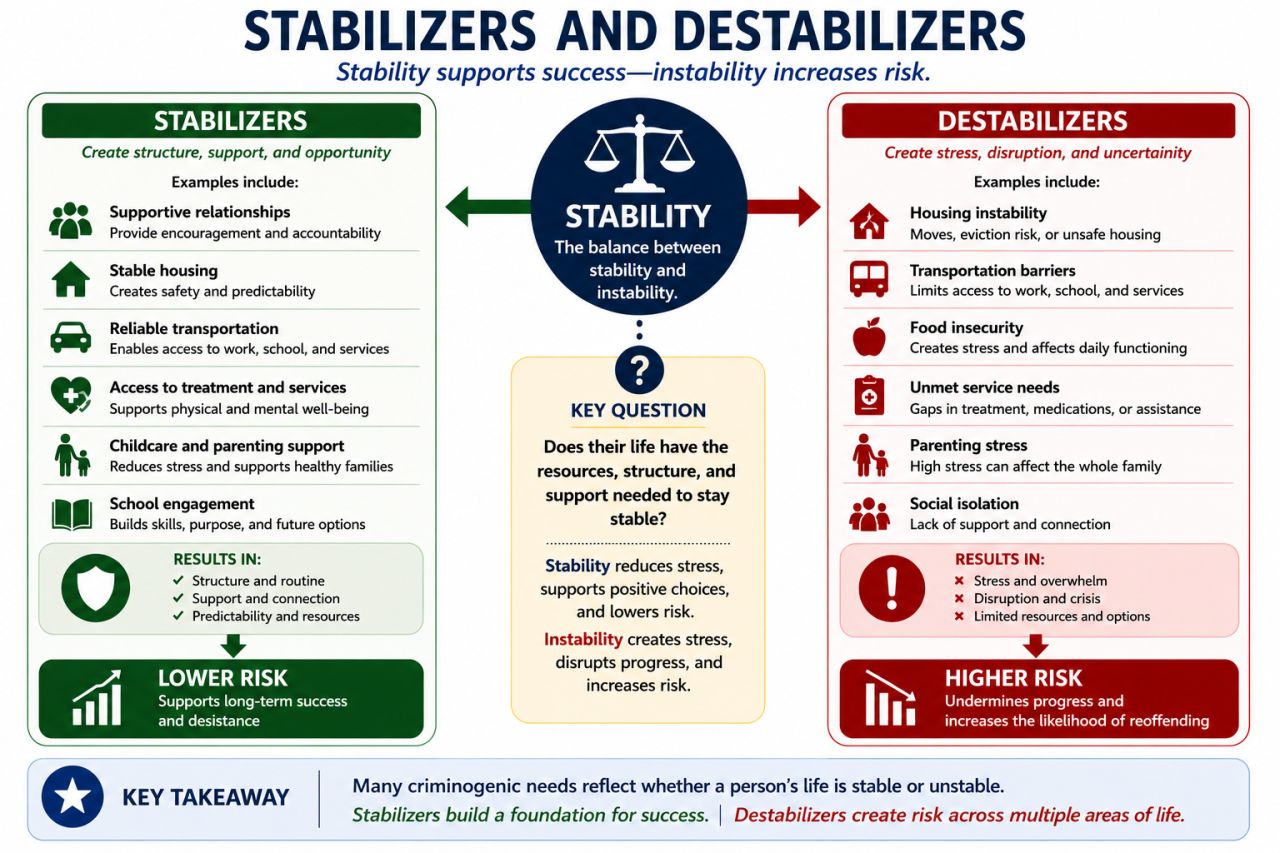
Many influences affect risk through a common pathway: whether they support or disrupt stability.
What Creates Stability?
Stabilizers can include:
- supportive relationships
- reliable transportation
- stable housing
- access to treatment and services
- childcare and parenting support
These factors create structure, predictability, and opportunities for success.
What Creates Instability?
Destabilizers can include:
- housing instability
- transportation barriers
- food insecurity
- unmet service needs
- parenting stress
These factors create stress, uncertainty, and disruption.
The Common Pathway
Many of these influences affect risk through a common pathway: stability.
The issue is often not whether someone has hobbies. The issue is whether they have the resources, structure, and support necessary to maintain a stable life.
Why This Matters
- Some traditional needs domains may reflect broader stabilizing or destabilizing influences
- Stability often supports long-term success and desistance
- Instability can undermine progress across multiple areas of life
Bottom Line
Historically, leisure was often treated as a separate need. More recent perspectives increasingly view it as one part of a broader network of stabilizers and destabilizers.

Zachary Hamilton
Professor
My research centers on innovation in risk and needs assessment development.